

Partial Shoulder Replacement
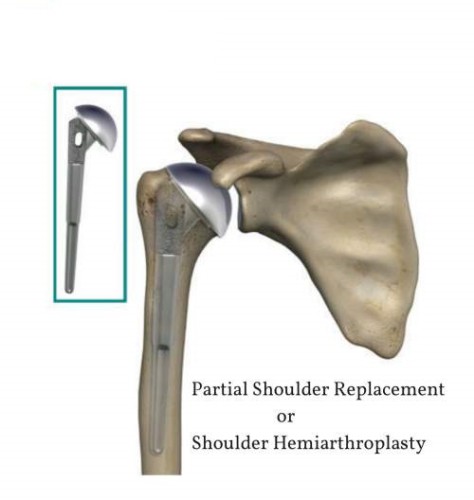
Partial Shoulder Replacement, also known as Stemmed Hemi-Arthroplasty, is a surgical procedure in which only the damaged ball of the shoulder joint is replaced with an artificial metal component. Unlike Total Shoulder Replacement, this procedure focuses on replacing the affected portion while preserving the remaining shoulder joint structures when clinically appropriate.
At Asian Orthopaedic Hospital, Partial Shoulder Replacement in Sabarmati is planned after evaluating the condition of the shoulder joint, extent of damage, symptoms, movement limitations, and individual functional requirements.
What Is Partial Shoulder Replacement?
The shoulder is a highly mobile joint that allows the arm to move in multiple directions. Damage to the shoulder can result in persistent pain, stiffness, weakness, and difficulty with everyday movements.
In Partial Shoulder Replacement, only the damaged ball, or humeral head, is replaced with an appropriate artificial metal component. The socket is preserved when it is suitable to do so based on the patient’s condition.
Partial Shoulder Replacement involves:
The suitability of Partial Shoulder Arthroplasty depends on the extent and location of joint damage and the overall condition of the shoulder.
Partial Shoulder Replacement Procedure
The treatment is planned after a detailed evaluation of the shoulder joint to determine the affected area and whether partial replacement is appropriate.
Shoulder Assessment
A comprehensive shoulder assessment evaluates pain, stiffness, strength, range of motion, medical history, and the extent of joint damage to determine the appropriate treatment approach.
Personalized Surgical Planning
The surgical plan is tailored to the patient’s shoulder condition, damaged joint surface, symptoms, mobility requirements, and functional needs.
Replacement of the Damaged Ball
During Partial Shoulder Replacement Surgery, the damaged ball of the shoulder joint is treated and replaced with a suitable artificial metal component while preserving the socket when clinically appropriate.
Supporting Shoulder Function
Following surgery, rehabilitation focuses on gradually restoring shoulder movement, strength, and functional use of the arm while supporting the recovery process.
Partial Shoulder Replacement Journey
Recovery following Partial Shoulder Replacement Surgery progresses gradually and varies between patients. Post-operative care, shoulder protection, physiotherapy, and regular follow-up play an important role in restoring shoulder function.
FAQs
Get in Touch